The Ng Mui myth
The legend of Ng Mui and Yim Wing Chun is frequently presented as historical fact, yet there is no evidence to support it. There are no historical records or artifacts, and all known representations are likely of recent origin.
The story of Ng Mui is a mythical narrative—that is, a story that goes beyond historical fact to recount the origins of our martial art and assign meaning to our current practice.
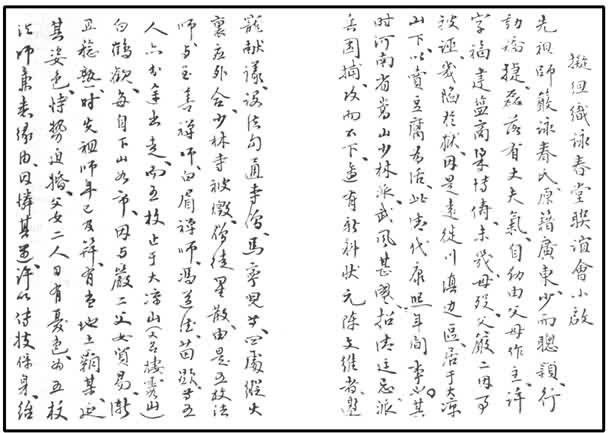
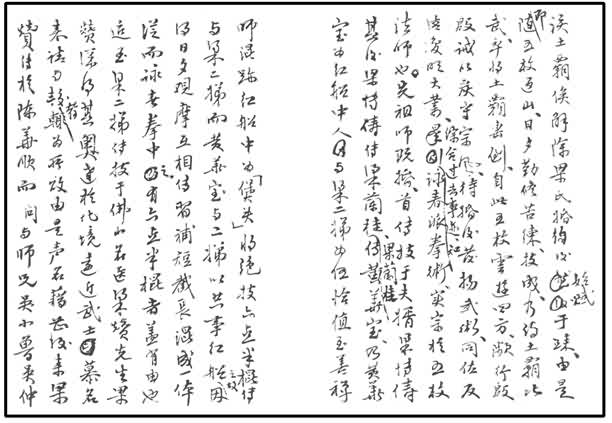
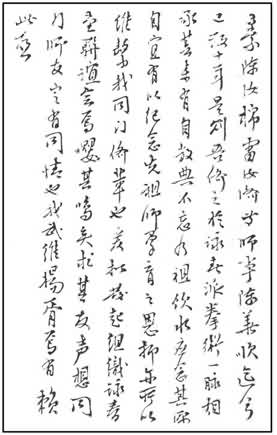
'The Origins of Wing Chun' (1965–1966) by Ip Man is one of the only written traces of the narrative; moreover, this text is merely a draft and is posthumous (1).
Wing Chun
"A style founded by a woman"
It is worth noting that female figures abound in Chinese martial arts folklore, and Wing Chun is by no means an isolated case. These myths, popularized during the late Qing era and the Republic, infused modern martial arts and subsequently popular culture through novels, operas, oral traditions, and more recently, films (2). A symbol for Wing Chun practitioners and often used as a marketing selling point by contemporary schools, the legend attributes the founding of the style to a woman: a point considered central to the art's identity. She embodies the idea that a combat system can be founded on strategic intelligence and an understanding of body structure rather than brute force. Whether she was a nun, a rebel general, or an allegorical figure, this is primarily how the narrative is interpreted.
Central figure
Having been Ip Man’s student for over 20 years, Master Lok Yiu was well acquainted with his Sifu’s history and stated himself: 'It is true, Wing Chun was founded by a woman, which explains its differences from other styles. One does not use one’s own strength to clash with the opponent’s force, especially when he is bigger and stronger. It is about letting the opponent’s force dissipate before attacking.' Ng Mui (Chinese: 伍梅大師, Wǔ Méi Dà Shī) is a central and legendary figure in Chinese martial arts. She is primarily known as one of the mythical Five Elders who survived the destruction of the Shaolin Monastery by the Qing dynasty. Her historical existence is uncertain, but her importance in the Wing Chun tradition is fundamental. She is universally recognized as the founder of the art, the one who transmitted the original system to Yim Wing Chun.
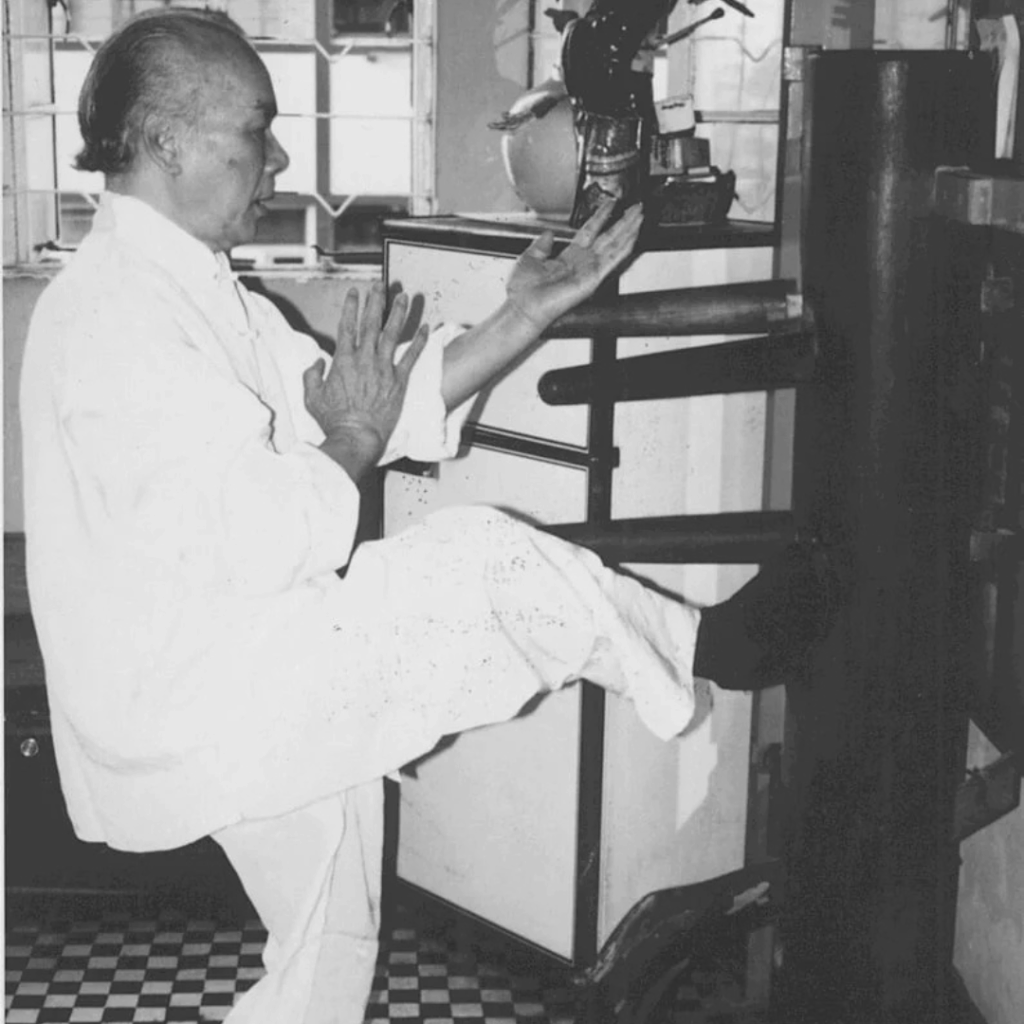
The Origin Story within the Ip Man Lineage
According to the oral tradition handed down by Grandmaster Ip Man, Ng Mui was a renowned master at the Southern Shaolin Monastery during the reign of the Kangxi Emperor (1662–1722). When the monastery was betrayed, burned, and destroyed by Qing forces, she managed to escape. Her flight supposedly led her to the White Crane Temple, located on Mount Daliang (the exact location of which remains a mystery). It was there that she reportedly met a young woman named Yim Wing Chun (2).
The meeting with Yim Wing Chun
Yim Wing Chun was reportedly originally from Canton (Guangzhou); she was betrothed to Leung Bok Chau, a salt merchant from Fukien. Shortly thereafter, her mother died, and her father, Yim Yee, was accused of a crime. To escape prison, the family fled to the border of Sichuan and Yunnan, at the foot of Mount Tai Leung (the exact location of which is unknown), where they opened a small shop. It was there that the nun Ng Mui reportedly met the young woman, who was being harassed by a local bully intent on forcing her into marriage. To enable her to defend herself, Ng Mui taught her Kung Fu in the mountains. Once her training was mastered (completed around 1790), Wing Chun returned to challenge the bully and defeated him in combat. She was finally able to marry her fiancé, Leung Bok Chau. It is said that Yim Wing Chun subsequently taught the style to her husband. He then passed the technique on to Leung Lan Kwai. In turn, Leung Lan Kwai taught the members of the 'Red Junk,' including Wong Wah Bo, and others. Upon Yim Wing Chun's death, around 1840, her husband is said to have named the Kung Fu style inherited from Ng Mui after her. In other words, rather than transmitting her art to her children (whose existence is, moreover, omitted by most legends), the story highlights the fact that the task of passing on the style fell to her husband.
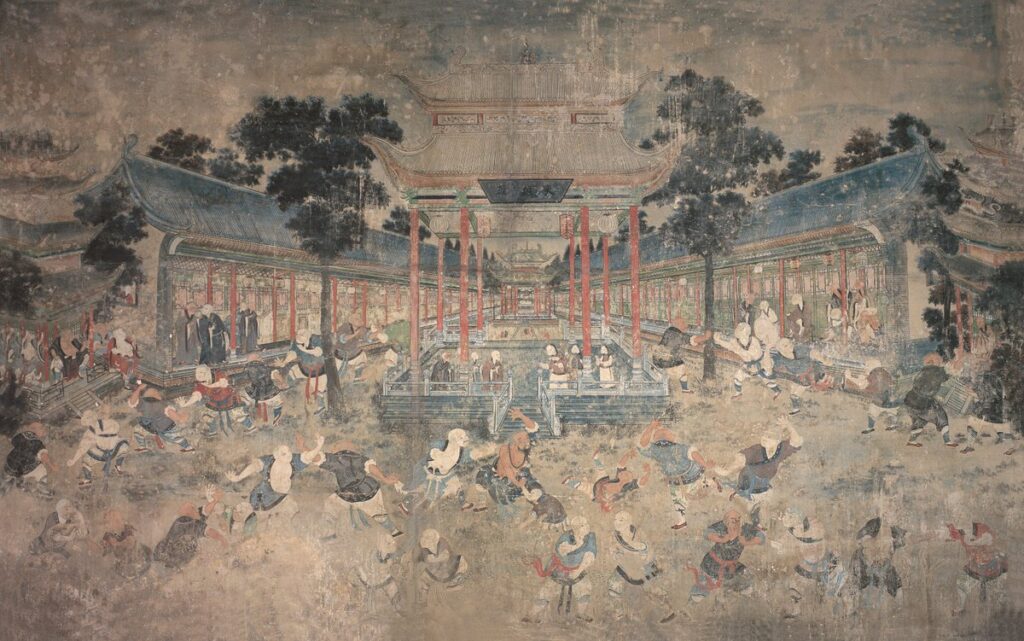
A mistress of many styles (4)
The legend does not limit Ng Mui’s knowledge to Wing Chun alone. She is often described as an accomplished expert in several major styles, drawing from both Shaolin and Wudang roots.
She is credited with the mastery, or even the creation, of several other arts :
Dragon Style
White Crane
Five Pattern Hung Kuen (which she reportedly co-founded with Miu Hin)
Her figure is associated with numerous iconic locations in China, such as the Shaolin Monastery, Mount Wudang (Hubei), Mount Emei (Sichuan), and various southern regions like Guangxi and Canton.
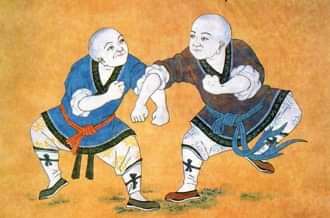
Other traditions and variations
The story of Ng Mui varies considerably across different schools and lineages :
Wǔ Méi Pài (Ng Mui Style) :
This tradition describes her as the daughter of a Ming dynasty general. After her parents were killed by the Manchus (Qing dynasty), she reportedly took refuge at the White Crane Temple, where she became a figure of the resistance. It was there that she supposedly developed her own techniques, notably balance exercises on the "Plum Blossom Poles" (Mui Fa Jong) to strengthen the legs. It is also said that she deepened her mastery of Qigong and internal energy ('Nei Gong') there.
Tibetan White Crane :
Another legend suggests that 'Ng Mui' was merely the Chinese name adopted by a Tibetan monk named Jikboloktoto."
Myth and History
It is always tempting to seek tangible historical traces of a narrative that may be purely imaginary, or at best, one that holds a distant memory that is forever inaccessible..
Separating historical fact from fiction in these accounts is impossible. Several elements of the legend raise questions : .
The presence of a nun—and a master at that—within a patriarchal monastic society like Shaolin at that time is historically improbable (though nunneries did exist). .
'Mount Daliang,' so central to the story, has never been located with certainty. .
The legend describes Yim Yee, Yim Wing Chun’s father, as a fugitive salt merchant. Under the Qing Dynasty, the salt trade was a strict state monopoly. It is therefore plausible that Yim Yee was a smuggler, which would explain his flight from the authorities and lend coherence to this part of the narrative.
The existence of Ng Mui and her legend are not substantiated by any historical source or artifact, as the tradition is entirely oral. The focus must therefore shift to questioning the social, cultural, and historical context of the myth's production and its transmission down to the currently accepted version (5). For example, how should we interpret the attribution of a martial art’s creation to a female founding figure? A male-dominated society imagines a figure of primordial female power. But does the myth truly serve to celebrate women ? The mythical founder is an 'exception' (a nun, a recluse), placed outside the bounds of ordinary society. Her expertise is subsequently integrated and transmitted by a lineage of men, who reclaim narrative control over the martial art. The female figure becomes a poetic and distant origin, while the actual structure of its practice and historical transmission remains masculine. What is the connection between the threat of a forced marriage—which might seem anecdotal—and the creation of a combat method ?
Sources pour aller plus loin :
(1) https://www.vingtsun.org.hk/
(2) https://chinesemartialstudies.com/2019/11/14/lives-of-chinese-martial-artists-9-woman-ding-number-seven-founder-of-the-fujian-yongchun-boxing-tradition/
(3) https://martialartscultureandhistory.com/en/the-origins-of-wing-chun-by-ip-man/?hl=fr-FR
(4) https://www.saar-wingchun.de/saarland/index.php/personen/ng-mui.html
(5) https://chinesemartialstudies.com/2015/02/16/yim-wing-chun-and-the-primitive-passions-of-southern-kung-fu/